
‘Common HogWeed’ – A useful wild plant
Common hogweed ( HERACULEUM SPHONDYLIUM) is a flowering perennial herb belonging to the carrot family (Apiaceae), closely related to parsley and fennel. Its Latin name hints at its appearance: the species epithet refers to “vertebrae,” a nod to the plant’s segmented structure. With its large, fern-like leaves and broad, flat umbrellas of tiny white flowers, it is an impressive and easily recognisable plant once you know what to look for.
Despite this, common hogweed is often confused with cow parsley. While they do share similarities, there are several clear characteristics that help distinguish one from the other.
Key Physical Features
Common hogweed is a tall, robust plant that can reach heights of up to 2 metres (6 ft 7 in). It has a hollow, ridged stem covered in coarse, bristly hairs, which rises from a substantial taproot. Although the stem resembles that of cow parsley, it is noticeably thicker, sturdier, and hairier.
Foliage
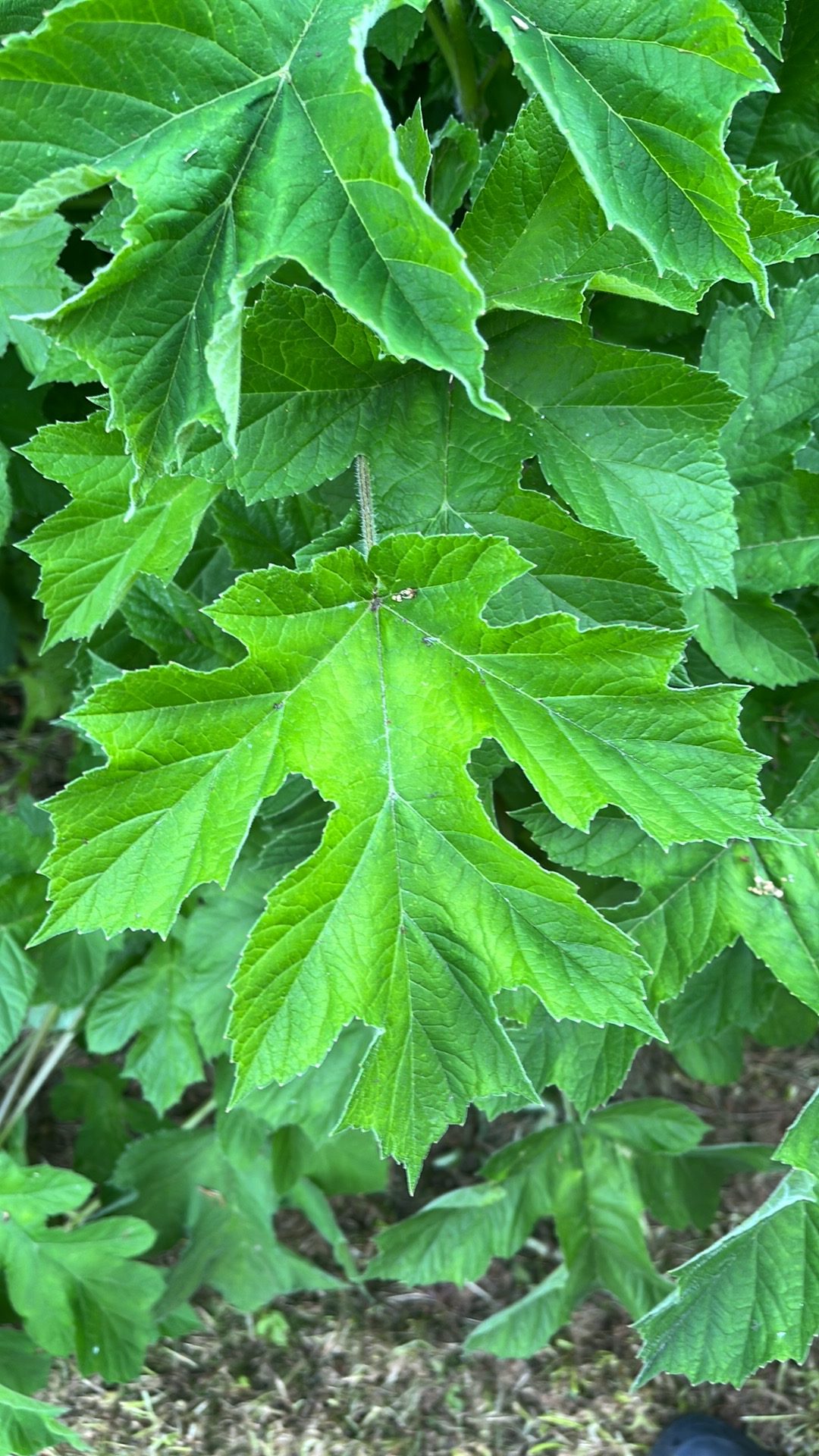
The leaves are another strong identifying feature. Hogweed leaves can grow up to 50 centimetres (20 inches) long. They are once or twice pinnate, hairy, and serrated, and are divided into three to five deeply lobed segments. Their jagged edges and size make them appear bold and heavy compared to similar plants.
Cow parsley, by contrast, has smaller leaves (up to around 40 centimetres long). These leaves are wider, less sharply lobed, and less jagged overall. Cow parsley foliage is more finely divided and arranged alternately along the stem, giving it a lighter, more delicate appearance.
Flowers and Umbels
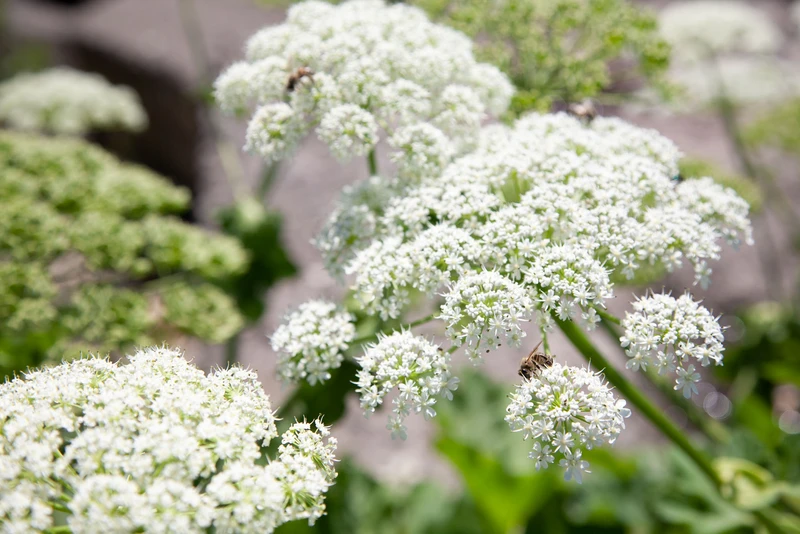
The flower heads of common hogweed are arranged in large umbels — umbrella-shaped clusters — which typically contain more rays than those of cow parsley. Hogweed umbels may have up to 45–50 rays, whereas cow parsley usually has no more than 30.
The flowers themselves are small and white, sometimes carrying a faint pinkish tinge. Interestingly, the flower size can vary across the same plant. (For clarity, “rays” refer to the individual stalks that radiate from the central stem to support each flower.)
Seasonal Growth
Common hogweed flowers from early summer through to early autumn. Fruits are ready for harvesting in autumn, once the flowering stage has passed.
Although it is sometimes labelled a noxious weed — particularly in contrast to its much more dangerous relative, giant hogweed (*Heracleum mantegazzianum*) — common hogweed can also be classified as a useful herb.
The name “hogweed” comes from its traditional use as livestock fodder, especially for pigs. This was likely due to its abundance and availability across the countryside. Beyond farm animals, hogweed is also a valuable plant for wildlife, attracting an impressive range of insect species — reportedly as many as 819.
Culinary Uses
Every part of the common hogweed plant is edible. It is non-toxic when consumed, although eating large quantities may cause gastrointestinal discomfort in some people.
Young leaves and shoots can be boiled and eaten, with a flavour often compared to asparagus. The leaves may also be fried in butter or gently braised. Older leaves are better suited for stocks, where they add a deep, savoury note rather than being eaten on their own.
The roots can be fried for a light supper or prepared as a pungent condiment. When green, the seeds can be added to dishes and have a distinctive orange-cardamom flavour that delivers a spicy kick. Flower buds are also edible and make a pleasant addition to white sauces.
Nutritional Profile
**Leaves (per 100 g fresh):**
* Vitamin C: 105 mg
* Carotene: 3.25 mg
**Whole plant (per 100 g fresh):**
* Carbohydrates: 6.42 g
* Protein: 5.31 g
* Energy: 50 kcal
Traditional and Folklore Uses
In traditional folklore, common hogweed was used to treat jaundice, warts, sores, and bleeding. For liver complaints and jaundice, the roots were boiled and the resulting liquid consumed. The pollen was reportedly dusted onto sores, while the plant’s juice was applied directly to warts.
There are also accounts suggesting that travelling communities once dried the stems and used them as a substitute for cigarettes.
Precautions and Safety
Always handle common hogweed with care and wear protective gloves when harvesting. The plant contains furanocoumarins, particularly concentrated in the oils found on the stems. These compounds can cause skin irritation, blistering, and photosensitive reactions that may not appear immediately after contact.
Avoid use during pregnancy, as there are conflicting reports regarding its potential effects on menstrual cycles.