Using a Ferrocerium Rod: Reliable Fire in All Conditions
Using a Ferrocerium Rod: Reliable Fire in All Conditions
Fire is one of the core skills of bushcraft, and the ‘ferrocerium rod’ is one of the most reliable tools for producing it. Often referred to as a ferro rod, this simple piece of modern metal throws a shower of hot sparks capable of igniting tinder in wind, rain, and cold – conditions where matches and lighters often fail.
While the material itself is modern, the skill required to use it well is traditional. Success depends less on the rod and more on preparation, control, and understanding natural materials.
What Is a Ferrocerium Rod
A ferrocerium rod is made from a blend of metals that shed burning particles when scraped with a hard, sharp edge. These sparks burn extremely hot and can ignite a wide range of natural and prepared tinders.
Unlike flint and steel, a ferro rod does not rely on carbon steel or char cloth and will spark even when wet, making it a dependable tool for both learning and use in poor conditions.
What You Need
To use a ferrocerium rod effectively, you will need:
- A ferrocerium rod
- A striker or the squared spine of a knife
- Suitable tinder such as dry grass, birch bark, feather sticks, fungus, or prepared tinder
Good fire lighting begins before the first spark. Tinder should be dry, finely processed, and ready to catch immediately.
Preparing the Fire
Choose a safe location and prepare your fire lay before striking the rod. This might be a simple tinder bundle with kindling close at hand, or a small teepee or lean-to depending on conditions.
Place your tinder on dry ground or on a base such as bark. Do not try to catch sparks in the air -bring the sparks to the tinder.
Striking the Ferro Rod
There are two common methods, but one offers greater control, particularly in difficult conditions.
Fixed Rod Method
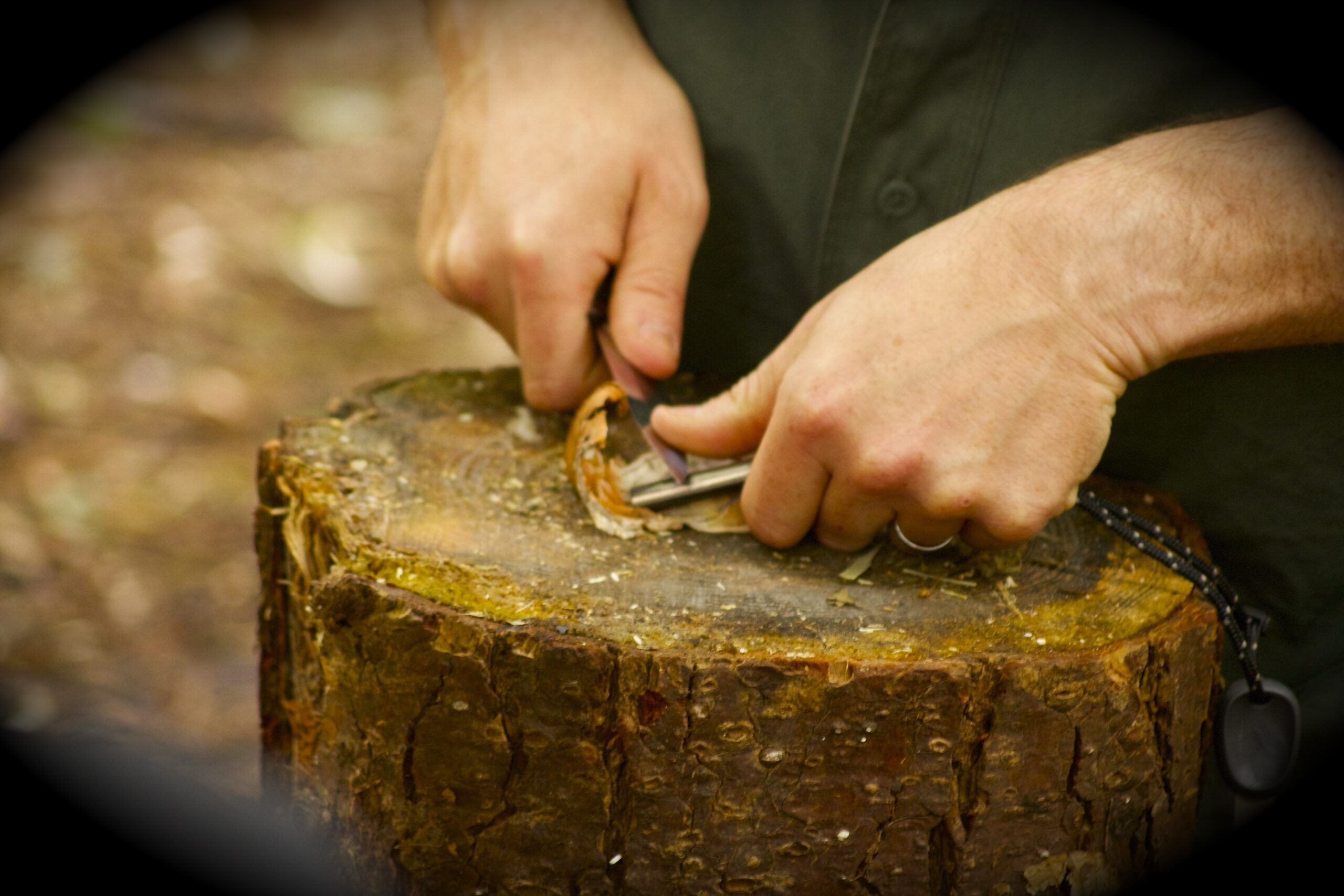
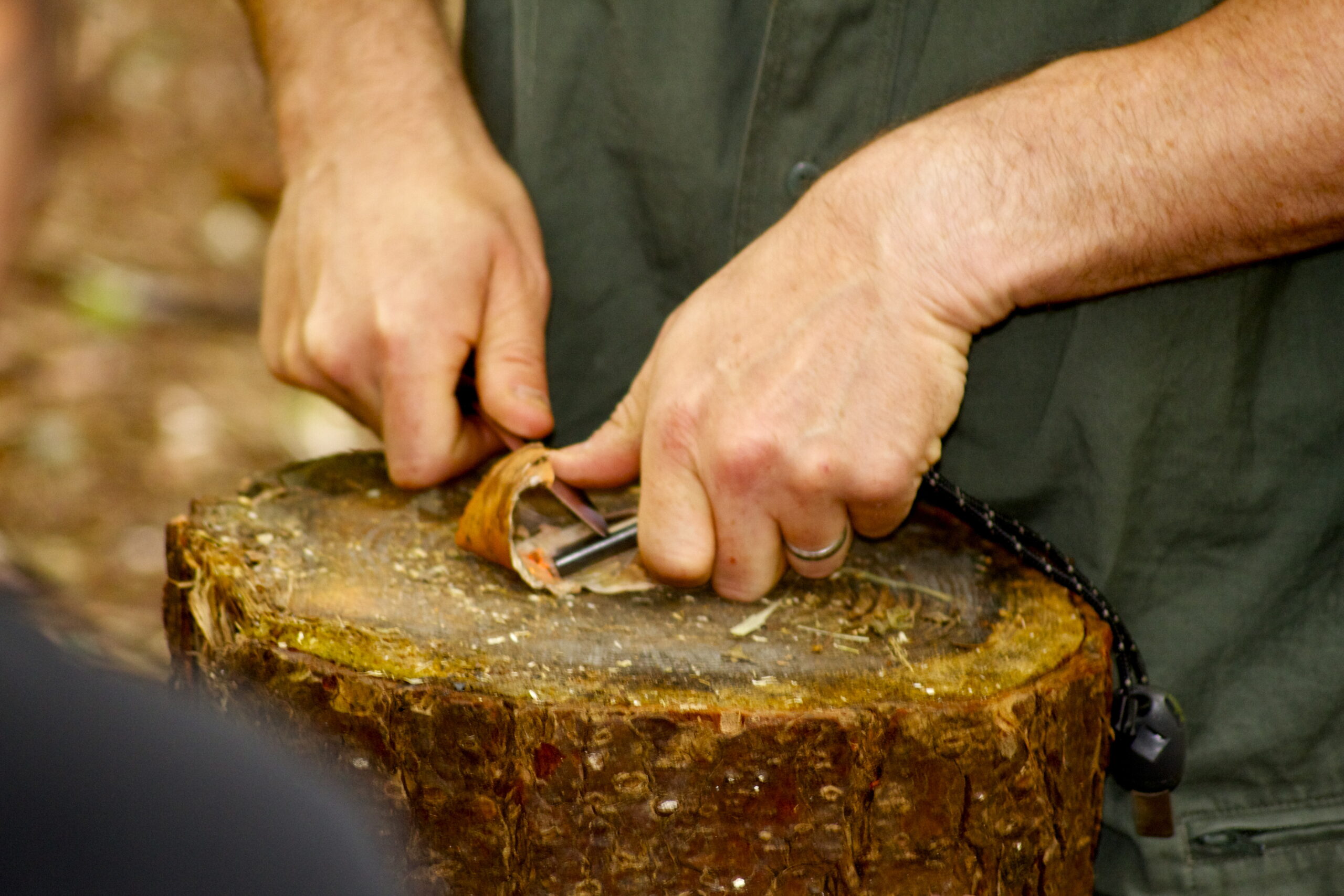
Hold the rod steady with the tip close to or resting in the tinder. Push the striker or knife spine forwards down along the rod. This directs sparks accurately however if not controlled it can scatter the tinder.
Pull Rod Method
Hold the striker still and pull the rod back towards you. This can be effective but requires good control.
In both methods, apply firm, deliberate pressure. Light scraping produces weak sparks; confident, controlled strikes produce a dense shower of heat.
Striker Choice
A purpose-made striker works well, but a squared knife spine is often more effective. Avoid using the blade edge, as it offers no advantage and can damage the knife.
Working With Natural Tinder
Different tinders respond differently to sparks:
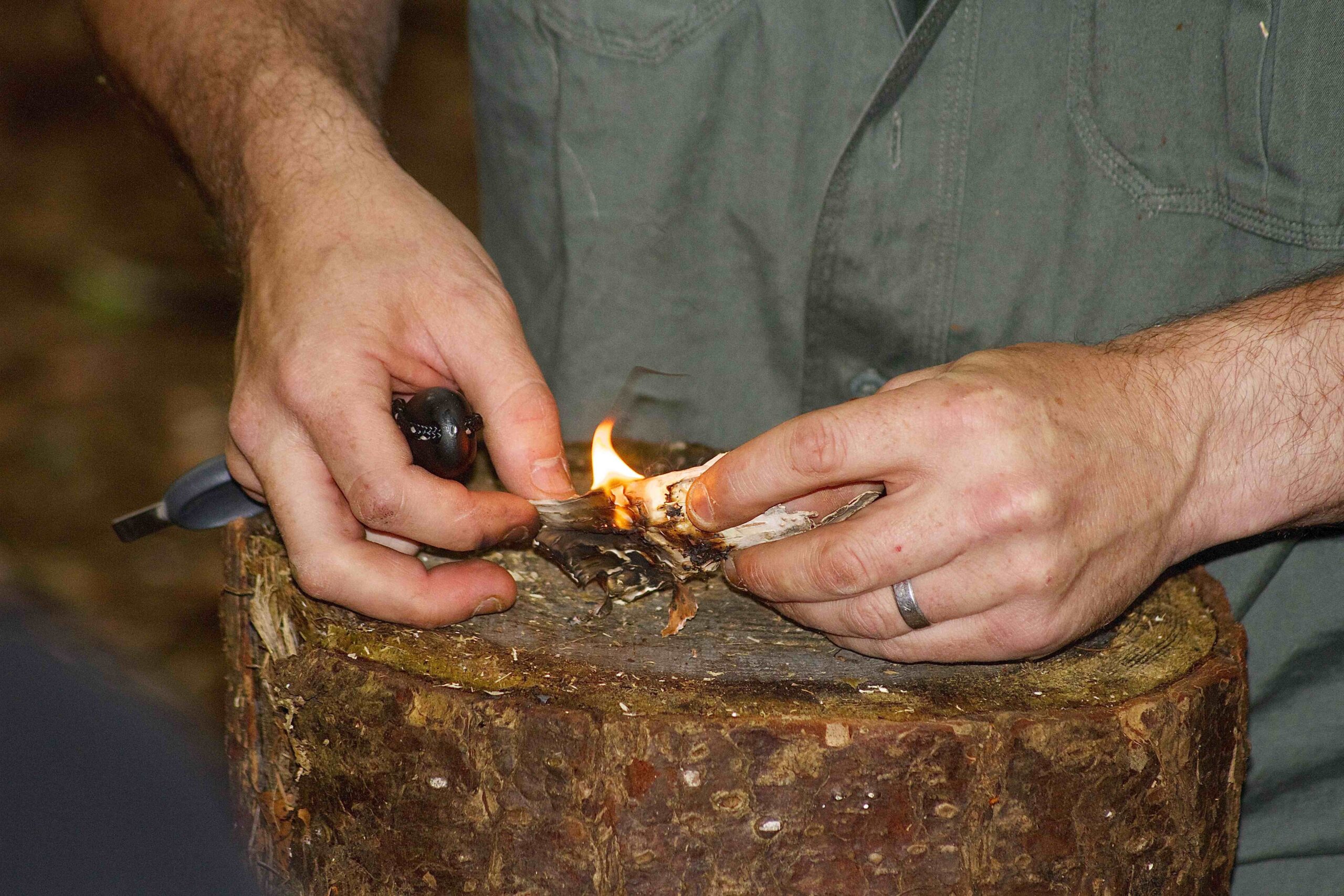
- Birch bark ignites easily due to its natural oils
- Dry grasses and seed heads must be finely fluffed
- Feather sticks catch best when shaved thin and tight
- Fungus often requires drying and preparation
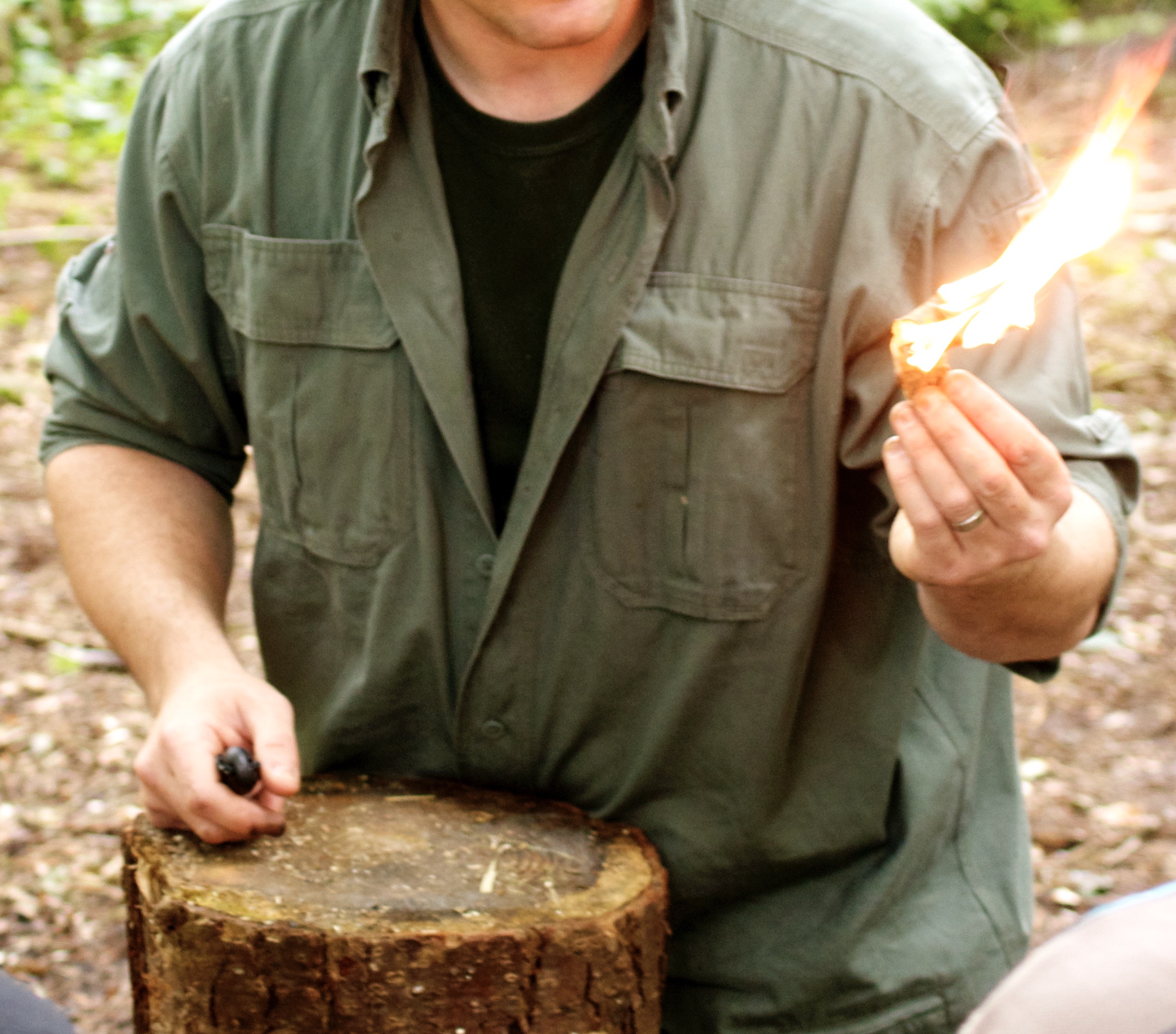
If the tinder smoulders rather than flames, gently blow to introduce oxygen and build it into fire.
Common Mistakes
- Poorly prepared tinder
- Striking too lightly
- Holding the rod too far from the tinder
- Knocking the tinder apart
- Rushing before the fire lay is ready
Fire lighting is as much about order and patience as it is about ignition.
Practice and Skill
A ferrocerium rod is not a shortcut, but it is forgiving. With regular practice, technique becomes economical and reliable, even in challenging weather. Over time, the focus shifts from producing sparks to reading conditions and preparing materials.
In bushcraft, fire is more than warmth or cooking. It is a measure of awareness, confidence, and self-reliance. Used well, the ferrocerium rod is one of the most dependable tools you can carry.