Coltsfoot (Tussilago farfara): An Early Healer of the Wayside
Coltsfoot (Tussilago farfara): An Early Healer of the Wayside
Often appearing before spring has fully arrived, Coltsfoot is one of the earliest wild plants to announce the changing season. Its bright yellow, dandelion-like flowers push through bare ground, track edges, riverbanks, and disturbed soils long before its leaves emerge.
For generations, coltsfoot has been recognised as a plant of transition, bridging winter and spring and valued for both its practical and medicinal uses. At Wild Walk Bushcraft, it offers an excellent opportunity to explore early-season plant knowledge, traditional remedies, and the close relationship between landscape and survival.
___________________________________________________________________________
Landscape, Seasonality, and Traditional Context
Coltsfoot thrives in disturbed ground, often where soil has been exposed by erosion, livestock, or human movement. From an experimental archaeology perspective, this makes it especially significant. Plants that grow along paths, river crossings, and camp margins would have been among the most frequently encountered by early communities.
Its early flowering suggests an important role in seasonal health practices, particularly at a time when respiratory illness was common after winter confinement and smoke-filled dwellings.
___________________________________________________________________________
Identification in the Field
Correct identification is essential, especially early in the season.
Key features include:
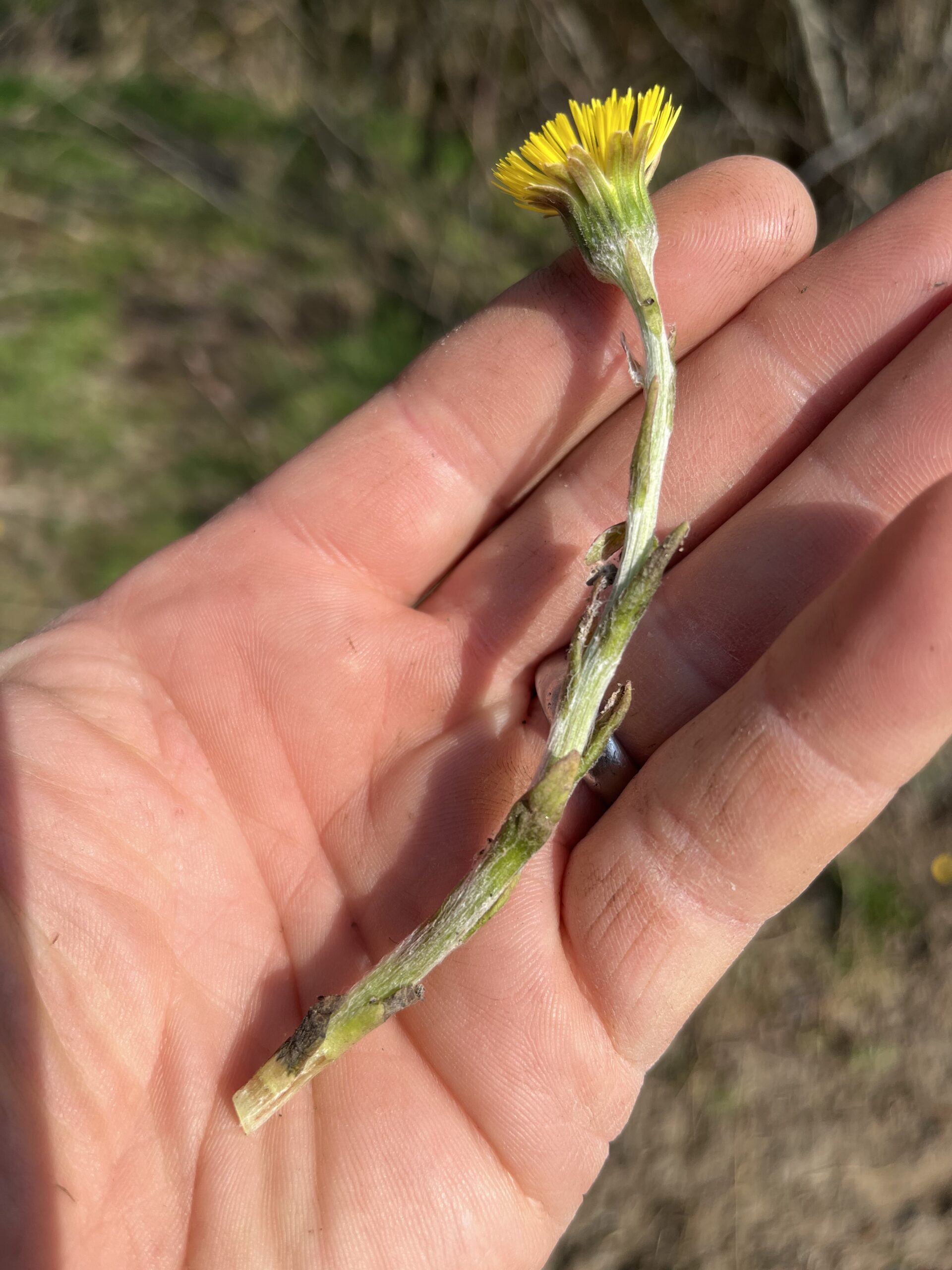
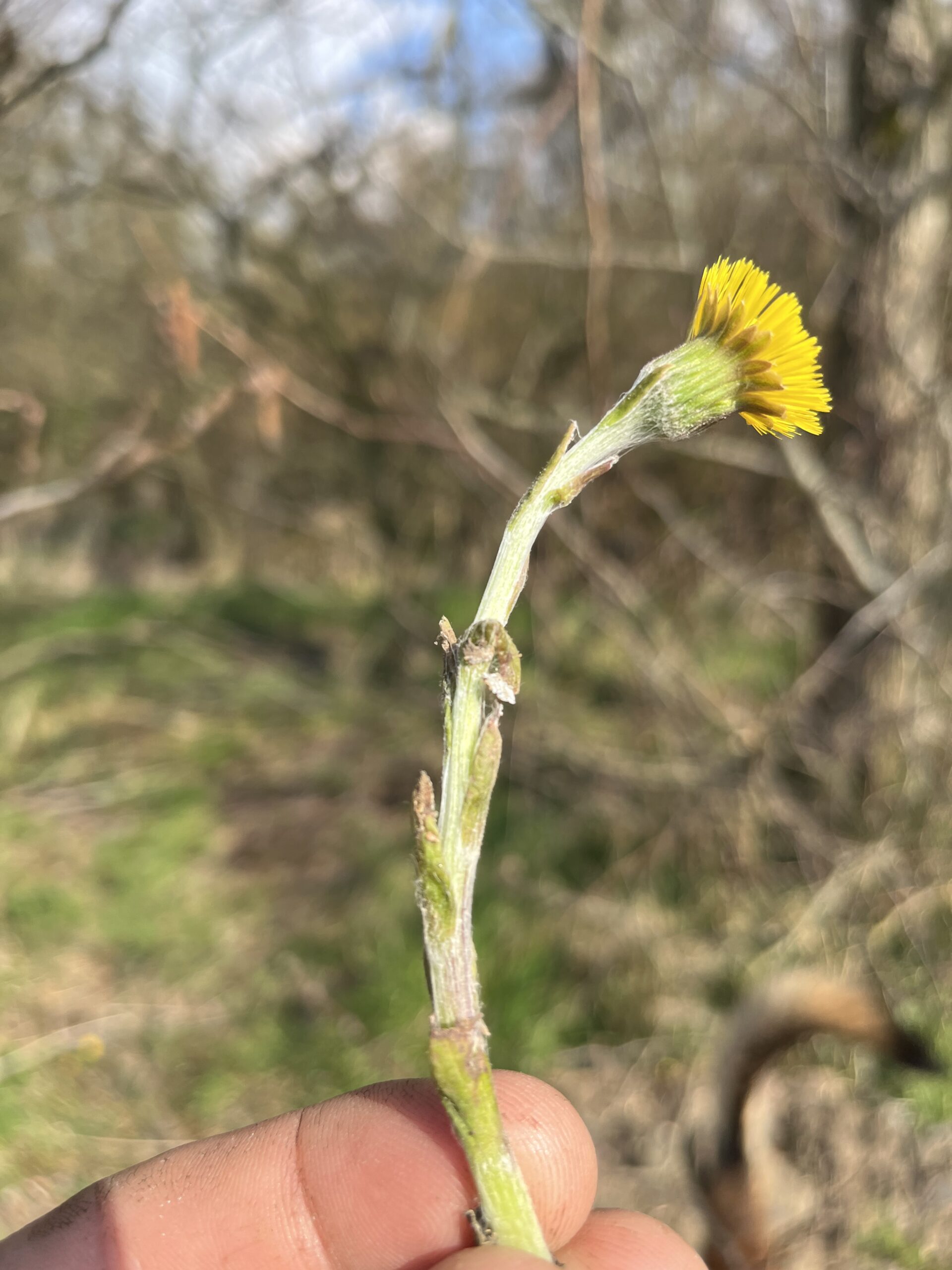
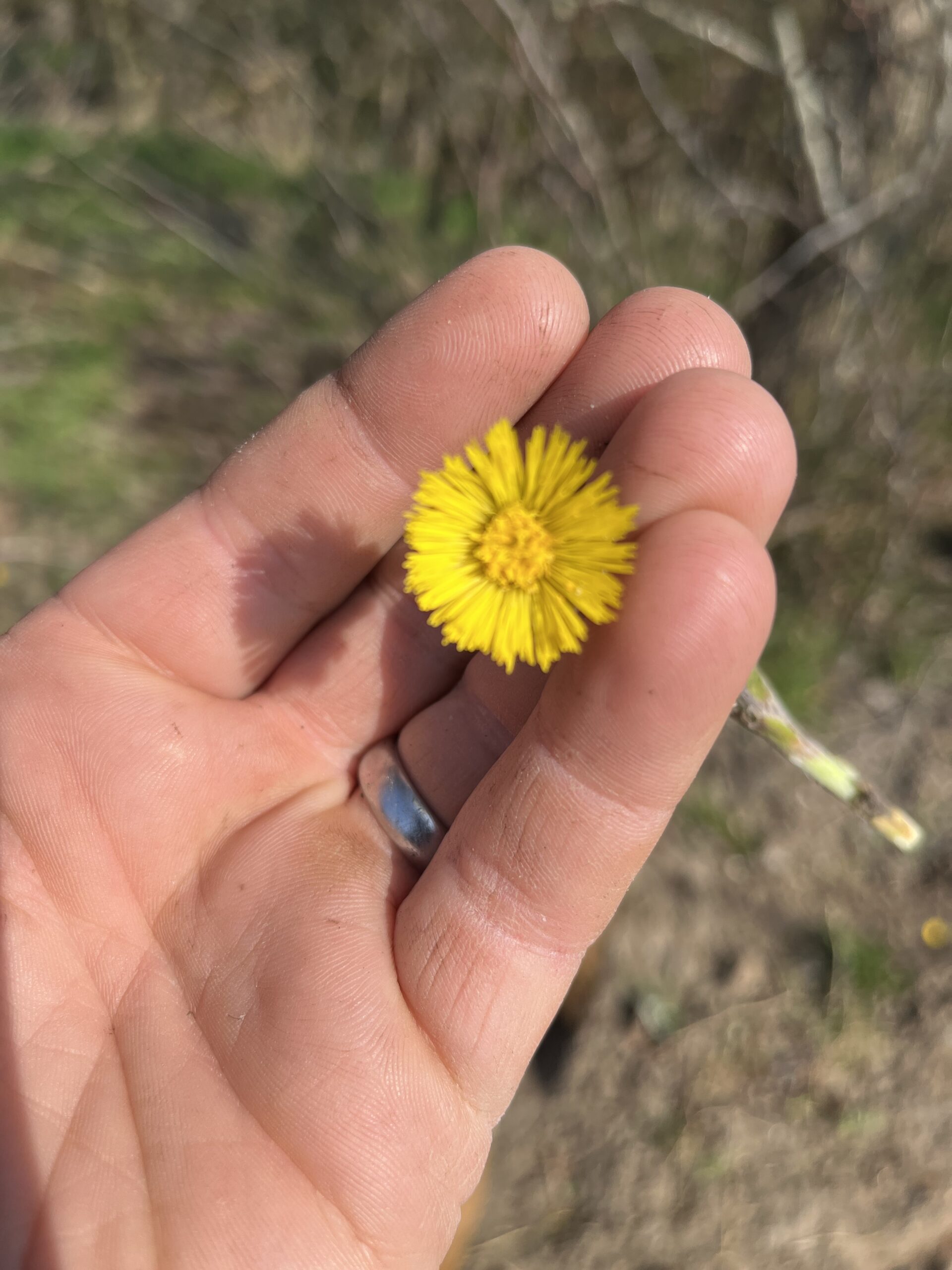
- Bright yellow, daisy-like flowers appearing before the leaves
- Flowers borne on scaly, reddish stems
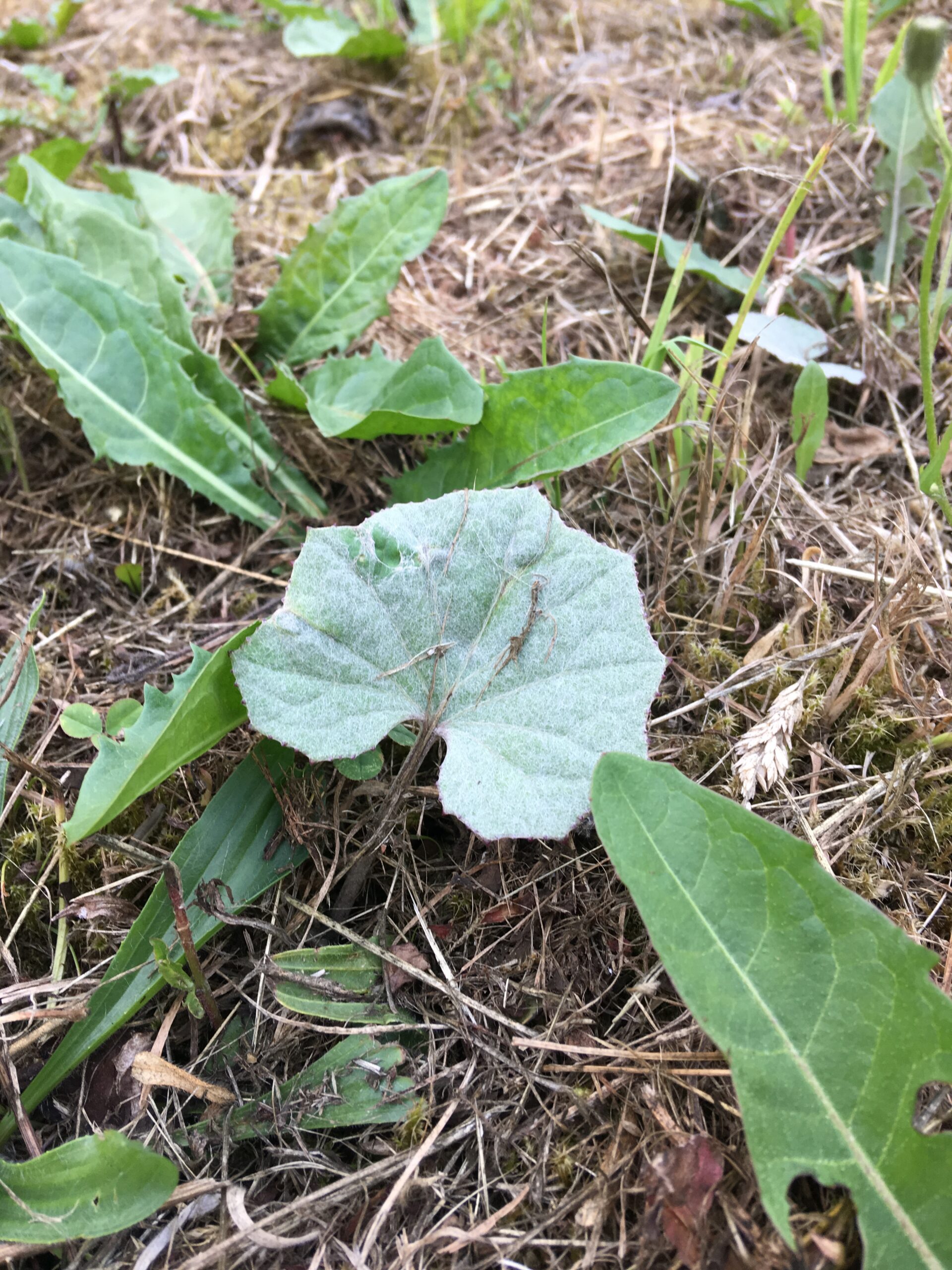
- Large, hoof-shaped leaves appearing later (the origin of the name “coltsfoot”)
Coltsfoot is often confused with dandelion, but dandelion flowers appear after leaves have emerged, and its stems are hollow and smooth.
___________________________________________________________________________
Traditional Health Uses
Coltsfoot has a long history of use across Europe, particularly in folk medicine.
Traditionally, it has been used to:
- Soothe coughs and chest complaints
- Calm irritation of the throat
- Support respiratory comfort after winter
The plant’s botanical name Tussilago comes from the Latin tussis, meaning cough, reflecting its long-standing association with respiratory health.
Modern guidance suggests coltsfoot should be used sparingly and occasionally, and it should not be consumed long-term. As with all wild plants, traditional use does not replace medical advice.
___________________________________________________________________________
Ethical Harvesting
Coltsfoot is often widespread, but ethical harvesting is still essential.
- Take only a small number of flowers or leaves
- Harvest from clean ground away from pollution
- Avoid overharvesting early-season plants
- Never uproot entire plants
This mirrors traditional practices where early spring plants were gathered with care to ensure future growth.
___________________________________________________________________________
Coltsfoot in Traditional Preparation and Bushcraft Use
Coltsfoot was valued not for abundance, but for function. Its preparations are simple and suited to low-tech environments.
___________________________________________________________________________
Coltsfoot Flower Tea
Ingredients
- Fresh or dried coltsfoot flowers
- Hot water
Method
Steep flowers gently for 5-10 minutes. Traditionally used to soothe the throat and chest, particularly after exposure to cold or smoke.
___________________________________________________________________________
Coltsfoot Leaf Tea
Once leaves appear later in the season, they can also be dried and used sparingly for tea. Historically, leaves were often dried near hearths or in warm shelters.
___________________________________________________________________________
Coltsfoot Syrup (Traditional Method)
Ingredients
- Coltsfoot flowers
- Honey
Method
Layer flowers and honey in a jar and allow to infuse for several weeks. This syrup was traditionally used in small amounts to ease coughs.
___________________________________________________________________________
Coltsfoot as a Smoke Herb (Historical Context)
In some traditions, dried coltsfoot leaves were smoked or burned to relieve chest congestion. This practice is discussed in historical sources and experimental archaeology contexts but is not recommended today due to modern health understanding.
___________________________________________________________________________
Experimental Archaeology Insights
From an experimental archaeology standpoint, coltsfoot offers insight into early medicinal plant use. Its accessibility, early emergence, and targeted effect suggest it was a plant of necessity rather than luxury, used when few other resources were available.
Preparing coltsfoot using simple infusions, drying techniques, and honey preservation allows us to better understand how early people managed health using minimal tools and seasonal knowledge.
___________________________________________________________________________
Learning Through the Seasons
At Wild Walk Bushcraft, plants like coltsfoot are used to teach more than identification. They help develop an understanding of seasonal rhythms, ethical harvesting, and the practical realities of traditional living.
Knowing when a plant appears, where it grows, and how it was historically used deepens our connection to both landscape and past lifeways.
___________________________________________________________________________
Closing Thoughts
Coltsfoot is not a plant of abundance or flavour, it is a plant of timing and purpose. Appearing when little else is available, it reminds us that early spring was a critical moment for health, observation, and careful use of resources.
Handled with respect and understanding, coltsfoot offers a tangible link to traditional knowledge and the quiet resilience of those who lived closely with the land.